
 By Lesa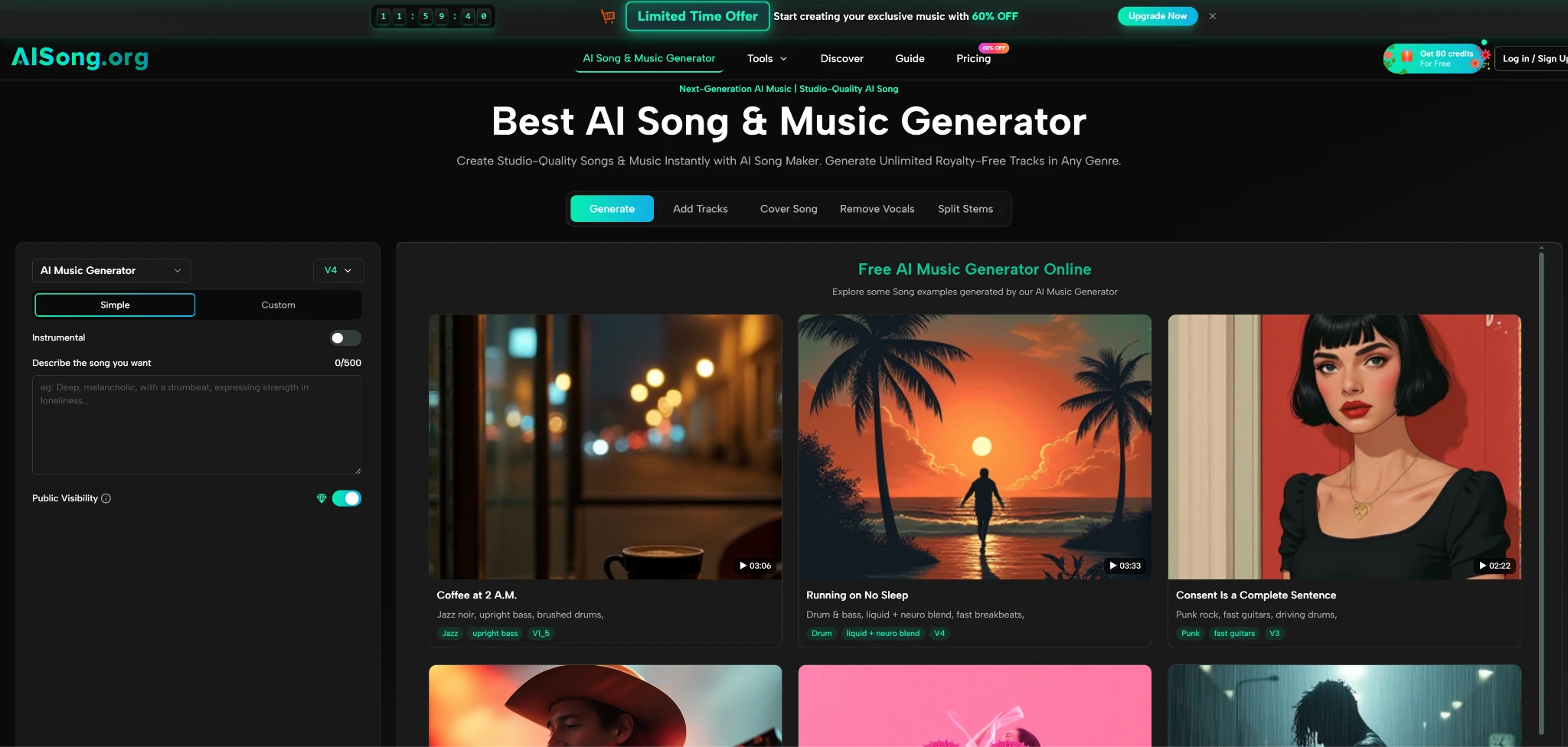
The first thing I noticed after spending time with AI Song Generator is that it does not behave like a toy prompt box pretending to be a music studio. A lot of AI music tools can produce something fast, but speed alone is rarely the real problem. The real problem is whether the result feels usable, whether the workflow encourages iteration, and whether the platform helps you move from vague idea to workable draft without constantly starting over. In my testing, this is where the platform becomes much more interesting than its headline promise suggests.
That matters because most people who try AI music are not chasing a perfect finished single on the first click. They want a draft they can react to. They want a chorus idea they can test, a backing track they can shape, or a song direction they can judge before sinking more time into it. This platform seems designed around that reality. It lowers the effort needed to get a first version, then gives you just enough structure and post-generation tools to keep the idea alive.
What Stands Out During Actual Use
The strongest impression is not any single feature. It is the way the parts connect. The site is clearly built around a larger creation cycle rather than a single magic-generation moment.
The First Draft Arrives With Low Friction
The entry point is straightforward. You choose between Simple and Custom, pick a model, enter either a style description or lyrics, and generate. That sounds basic, but in practice it matters because many music products become clumsy before the user has even heard a result.
Here, the setup remains short enough that experimentation feels natural. You do not spend the first ten minutes configuring technical parameters you barely understand. You get to the actual song quickly, which is exactly what most users want from an AI workflow.
The Tool Feels Built For Reactions
In my view, this is a platform best judged by what it lets you do after the first output. The initial generation is important, but what matters more is whether the result creates momentum. On that front, the platform performs better than many simpler AI song tools because it supports regeneration, track extension, vocal removal, stem splitting, and track additions.
That turns a song from a dead-end file into a working creative object. Even when the first version is not fully right, it often gives you something worth developing.
Why This Changes The Review Completely
A lot of AI music reviews focus on whether the first song is amazing. I think that is the wrong standard. The better question is whether the platform helps you get somewhere useful fast. In that sense, this product reviews more favorably, because it behaves like a draft engine with editing support rather than a one-shot generator with marketing polish.
How The Core Generation Holds Up
The platform’s dual-mode setup is one of its smartest choices. It recognizes that users do not all begin from the same place.
Simple Mode Is Better Than It Looks
Simple Mode is the route most casual users will start with, and honestly, that is the right decision. You can describe the mood, genre, or energy of the track without needing to think like a producer. In testing terms, this makes idea discovery much easier. You can try “melancholic indie pop,” “cinematic piano ballad,” or “bright summer dance track” and get a draft without writing a full lyrical structure first.
That makes the tool feel approachable without making it feel shallow. It understands the real behavior of beginners and busy creators: most people want to explore direction before they want to control every line.
Custom Mode Adds Real Review Value
Custom Mode is where the platform becomes more serious. Once you bring your own lyrics into the process, the tool shifts from generic generation to guided interpretation. That gives the review a very different tone, because now the platform is not merely inventing music on your behalf. It is helping you hear what your own written idea might sound like as a finished song.
This is also where the integrated lyric support becomes useful. Users who do not want to write from scratch can still build more structured content than they would in a plain prompt field.
What I Noticed About Control
The control here is meaningful, but not unlimited. You can steer, shape, and improve results, but the tool still rewards clear input. If the lyrics are weak or the description is vague, the output can feel broad. That is not a deal-breaker. It is simply the normal rule of AI generation showing up in music form.
The Model Ladder Makes Practical Sense
A lot of platforms include multiple models just to create pricing tiers. Here, the model split actually feels tied to creative behavior.
Lower Models Make Sense For Testing
If your goal is to compare directions quickly, the lighter models are the logical place to start. You are not trying to produce your final showcase track yet. You are testing whether an idea has emotional weight, whether a lyrical concept translates musically, and whether the overall style fits your intent.
That makes these lower-tier models feel useful rather than merely restricted.
Higher Models Feel Better Reserved For Proven Ideas
The more advanced models appear better suited to tracks you already believe in. Once you know a song concept is worth pushing further, moving to stronger models makes more sense. From a reviewer’s perspective, this is a good sign. It suggests the platform can support both sketching and refinement instead of forcing every idea through the same cost structure.
Why V4.5 Feels Like The Sweet Spot
If I had to pick a practical everyday option, V4.5 looks like the most balanced choice. It seems to sit in the middle ground where quality, usability, and cost align well. The more premium models may be attractive for standout tracks, but V4.5 feels like the level many regular users would return to repeatedly.
The Editing Layer Is Where It Earns Respect
This is the part that lifted the platform from “interesting” to “worth reviewing seriously” for me. The post-generation toolset gives it more substance than a basic AI song app.
Extend Song Solves A Real Creative Problem
A short draft is often enough to judge tone, but not enough to use. Extend Song addresses that gap directly. Instead of treating a good idea as locked to its first generated length, the platform lets you keep building on it.
For creators making video soundtracks, intros, social content, or draft demos, this matters a lot. A track that can grow is more valuable than a track that only impresses for thirty seconds.
Add Tracks Makes The Platform More Flexible
The Add Tracks feature is one of the clearest signs that the product is trying to be useful, not just flashy. You can work from an existing song layer and build around it, which means the platform is not limited to generating everything from zero every time.
This becomes especially useful when one part of a song works and another part does not. Instead of discarding the whole idea, you can treat the song as material.
Vocal Removal And Stem Splitting Add Production Value
These tools move the platform beyond casual experimentation. Once you can isolate vocals or separate core elements, the output becomes easier to reuse. Even if the platform does not replace a full production environment, it becomes much easier to imagine a creator taking the result into another workflow for editing, syncing, or content packaging.
Why This Changes The Product Category
Without these tools, the platform would mostly be an AI song generator. With them, it starts to feel more like a lightweight music workflow hub. That distinction matters because it affects how seriously creators can take it.
The Official Process Is Short For A Good Reason
One of the better things about the site is that the official flow stays grounded. It does not try to confuse simplicity with lack of capability.
Step One Pick The Right Entry Style
Choose Simple Mode if you are starting from mood or direction. Choose Custom Mode if you already have lyrics or want more control over the writing side.
Step Two Choose A Model And Refine Input
Select the model that fits your current goal, then define the song through style notes, mood, voice direction, or lyrics. This is where the quality of your own thinking starts to matter.
Step Three Generate And Evaluate Honestly
Run the generation, listen carefully, and decide whether the song solves your original goal. Not whether it sounds novel, but whether it feels useful.
Step Four Improve What Deserves More Time
If the result has promise, extend it, regenerate it, or use the editing tools to shape it further. If not, move on quickly and test a better prompt.
A Review Needs To Include Tradeoffs
No good review should make an AI music platform sound more perfect than it is. This one has real strengths, but the limitations are still worth stating.
| Review Area | My Read After Testing |
| Ease of starting | Strong, especially for non-musicians |
| Creative control | Better in Custom Mode than in basic prompting |
| Draft quality | Often good enough to evaluate direction quickly |
| Editing flexibility | Stronger than many similar tools |
| First-try perfection | Not realistic, iteration still matters |
| Best use case | Fast music drafting with practical post-tools |
It Still Depends On Prompt Quality
AI Song Maker lowers the barrier to making music, but it does not remove the need for judgment. Better inputs still lead to better songs.
The Best Results Usually Come After Revisions
In my experience, the strongest tracks are rarely the very first ones. But because the revision loop is short, this feels less frustrating than it would in a slower workflow.
Why That Limitation Is Acceptable
If a creative tool makes revision easy, imperfection stops feeling like failure. That is one of the main reasons this platform reviews well. It does not promise effortless genius. It gives users a workable system for finding good ideas faster.
Where This Platform Lands After Real Testing
After spending time with it, my impression is that the platform succeeds not because it generates songs, but because it makes the early stages of music creation less fragile. It helps ideas survive long enough to be judged, improved, or repurposed.
That is a more meaningful achievement than “instant music” marketing. For creators who need original tracks, faster demos, or a more forgiving way to develop song concepts, this platform feels practical in a way many AI tools do not. It is not a replacement for taste, craft, or revision, but it does make the first half of the journey much easier to begin, and that is exactly why it is worth taking seriously.