
 By Lesa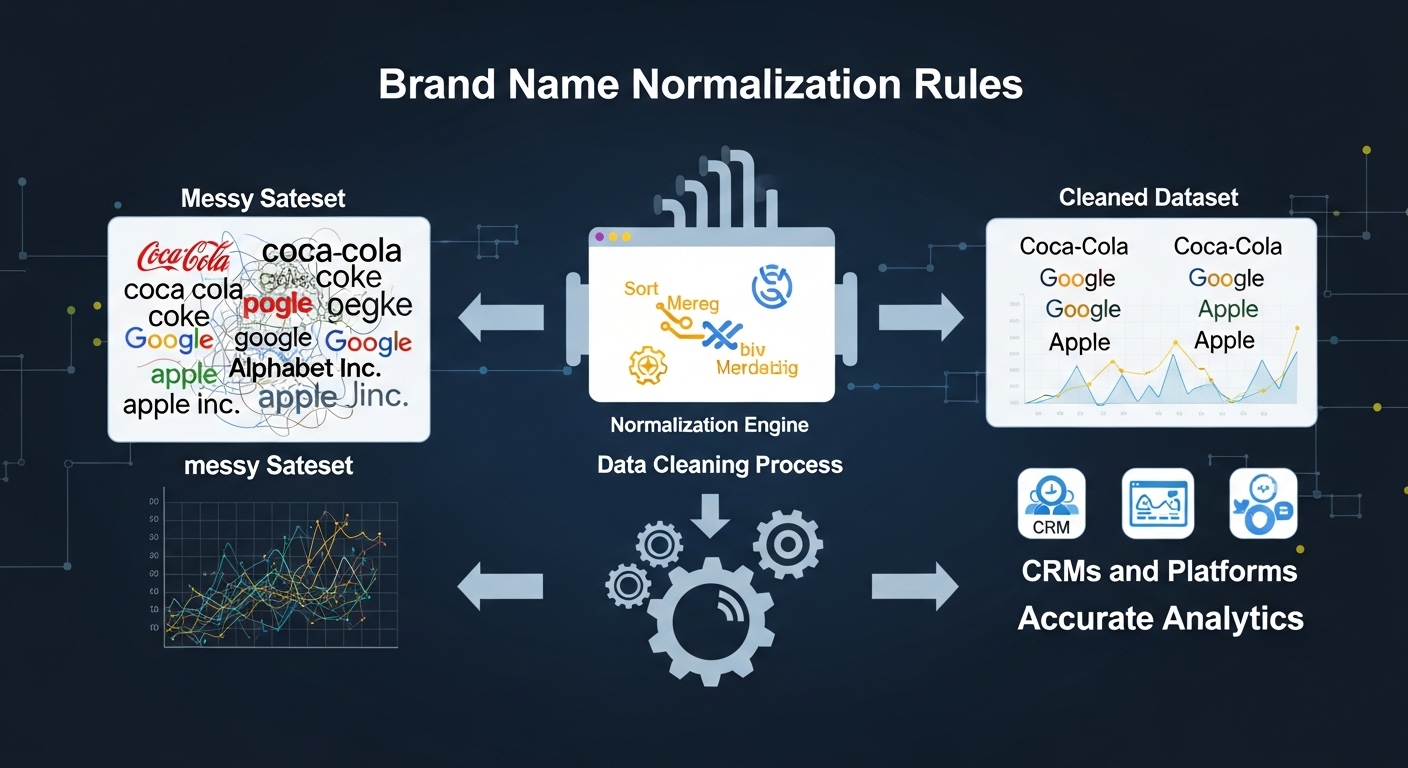
In the world of data management, brand name consistency is crucial. With countless variations and spellings floating around in datasets, duplicates can quickly become a headache for any organization. Enter brand name normalization rules—a systematic approach designed to streamline your data by reducing these pesky inconsistencies. Imagine sifting through endless rows of names only to find multiple entries for the same brand. It’s not just frustrating; it can lead to poor decision-making and wasted resources.
Brand name normalization isn’t merely about tidying up your spreadsheets; it’s about empowering your team with clear insights derived from reliable data. By implementing effective normalization rules, you set the stage for improved customer experiences and more informed strategic choices down the line. Let’s dive deeper into how embracing these rules can transform your datasets while ensuring that every mention of a brand shines brightly without overshadowing another!
The Impact of Duplicate Brand Names
Duplicate brand names can lead to significant confusion in the marketplace. Consumers may not know which product or service they are encountering, leading to mistrust and frustration.
From a business perspective, duplicates can dilute brand identity. When multiple entities share a name, it becomes challenging for consumers to distinguish between them. This can hinder marketing efforts and reduce customer loyalty.
Search engines also struggle with duplicate names. They may misinterpret queries or fail to display relevant results, adversely affecting visibility and reach.
In data management systems, duplicates create inefficiencies. Reporting becomes skewed due to inaccurate data insights, making strategic decision-making more difficult.
The repercussions extend beyond branding into customer experience as well. If users can’t find the right products easily, they might abandon their search altogether—resulting in lost sales opportunities for all involved parties.
Identifying and Cleaning Duplicate Brand Names
Identifying duplicate brand names can be a daunting task. It often requires careful scrutiny of your datasets. Start by looking for variations in spelling, abbreviations, or even typos. These minor differences can lead to significant confusion.
Using automated tools can streamline this process. Many software solutions offer features that detect duplicates based on similarities rather than exact matches. This ability saves time and increases accuracy.
Once you’ve identified potential duplicates, it’s essential to clean them up effectively. Standardize the names using consistent formats—capitalize all letters, remove special characters, or decide on a preferred version of each brand name.
Engage your team in this effort to ensure everyone agrees on the final listings. Collaboration enhances the likelihood of capturing every variation and helps maintain consistency across your dataset moving forward.
Common Normalization Rules for Brand Names
Brand name normalization is essential for maintaining data integrity. One common rule is standardizing abbreviations. For instance, “Co.” and “Company” should be consistent across datasets.
Another important guideline involves case sensitivity. Choosing a uniform casing—either all lowercase or title case—can prevent similar names from appearing as distinct entries.
Removing special characters is also crucial. Symbols like “&”, “%”, or “-” can complicate searches and lead to duplicates if not treated consistently.
Additionally, simplifying brand names by eliminating unnecessary words helps create clarity. A brand known as “The Great Coffee Company” could simply be listed as “Great Coffee.”
Incorporating synonyms into your normalization process can enhance searchability. For example, using “TV” interchangeably with “television” ensures comprehensive coverage of related products in databases.
Tools and Resources for Implementing Normalization Rules
When it comes to implementing brand name normalization rules, several tools can make the process smoother. Data cleaning software like OpenRefine is popular for its ability to handle messy data efficiently.
For more advanced needs, consider using Python libraries such as Pandas. These offer powerful functionalities for data manipulation and are perfect for batch processing of large datasets.
Machine learning techniques can also enhance normalization efforts. Using algorithms that recognize patterns in names helps automate the identification of duplicates.
Additionally, cloud-based platforms like AWS or Google Cloud provide scalable solutions for data storage and processing. They integrate various services that assist with maintaining clean datasets.
Don’t overlook community resources and forums. Engaging with fellow professionals can unveil tips and best practices tailored specifically to your industry’s requirements.
Case Study: How a Company Successfully Implemented Brand Name Normalization Rules
A mid-sized e-commerce company faced challenges with duplicate brand names in their database. Confusion arose during product searches, leading to frustrated customers and lost sales.
To tackle this issue, the team implemented a systematic approach to brand name normalization rules. They started by analyzing existing data for inconsistencies and duplicates. Each brand was assigned a unique identifier based on standardized naming conventions.
Next, they established guidelines that included removing special characters, standardizing abbreviations, and using consistent capitalization. The team also trained staff on these new protocols for future entries.
After several months of diligent application of these rules, the company noticed significant improvements in search accuracy. Customer satisfaction ratings increased as users found products more easily. This transformation highlighted how effective normalization could enhance both operational efficiency and customer experience without extensive resource investment.
Benefits of Using Normalization Rules in Data Management
Implementing brand name normalization rules offers numerous advantages in data management. First, it enhances data clarity by eliminating duplicates that can confuse stakeholders. Clearer datasets lead to better decision-making.
Consistency is another major benefit. When brand names are uniform across all platforms and documents, teams can easily analyze trends or performance metrics without discrepancies skewing the results.
Normalization also improves customer experiences. Accurate branding allows for seamless interactions across various channels. Customers appreciate when they encounter consistent information about their favorite brands.
Moreover, efficient resource allocation becomes possible with clean datasets. Teams can focus on strategic initiatives instead of spending time reconciling conflicting brand entries.
Adhering to normalization rules fortifies compliance efforts too. With organized and standardized data, businesses are more prepared to meet regulatory requirements concerning accurate record-keeping.
Conclusion
Brand name normalization rules are essential for any organization that relies on accurate data. Duplicate brand names can lead to confusion and misinterpretation, affecting business decisions and customer relationships. By identifying duplicates and implementing effective cleaning strategies, companies can create more reliable datasets.
Common normalization rules help standardize brand names, which simplifies data management. Tools designed for this purpose streamline the process further, making it easier to maintain clean records over time. The case study provided illustrates how one company transformed its dataset through these practices, showcasing tangible results.
Embracing brand name normalization boosts efficiency across various departments—marketing teams gain clearer insights, sales professionals access cleaner lists of prospects, and analytics becomes more precise. Companies ready to invest in their data quality will find themselves at a significant advantage in today’s competitive landscape.
Establishing strong brand name normalization processes proves invaluable for businesses looking to enhance their operations while reducing errors caused by duplicate entries in their databases.